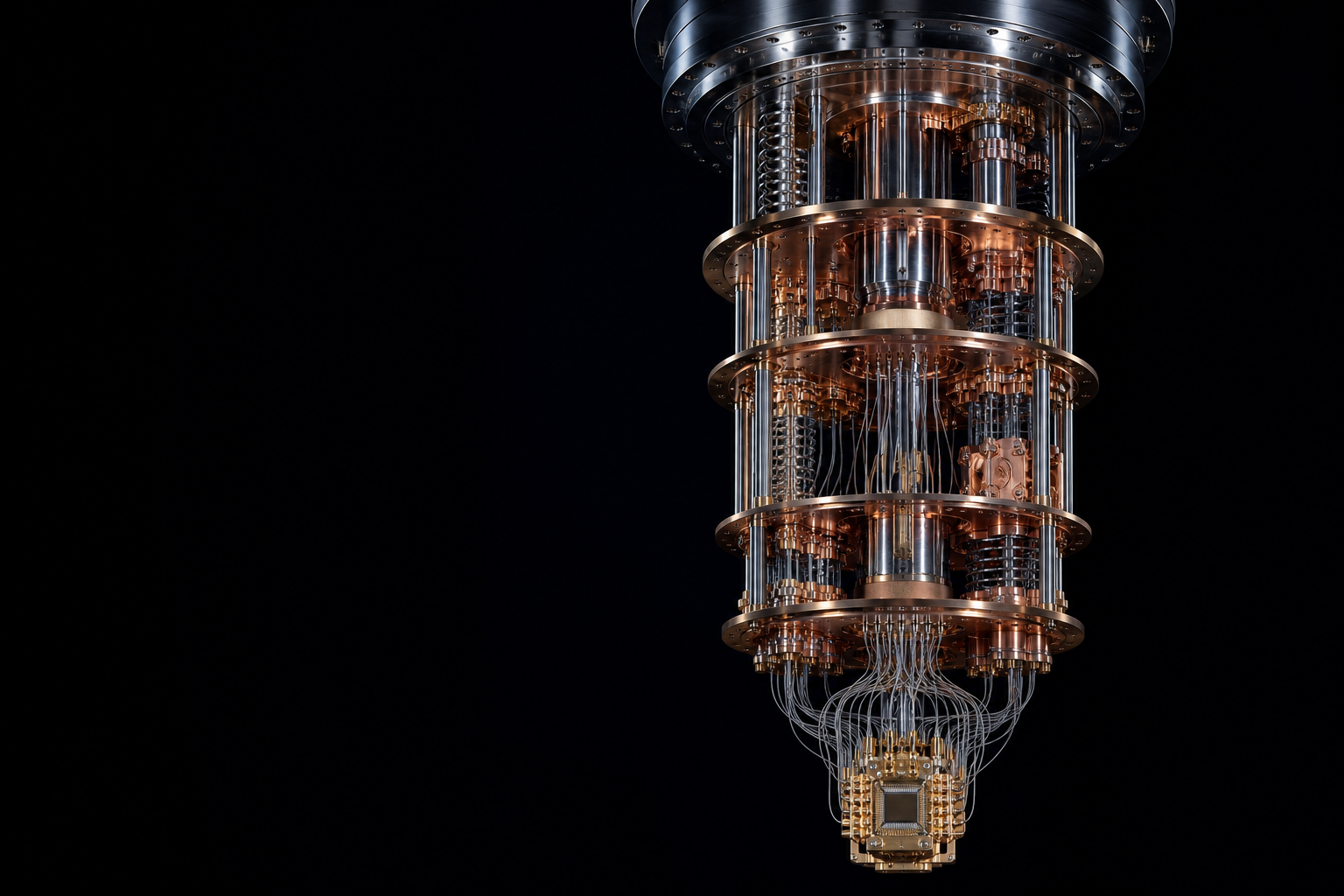
Quantum Cryogenics
QCRY maps the cold infrastructure behind quantum computing: dilution refrigerators, millikelvin stages, wiring, signal chains, suppliers, benchmarks, and careers.
The cold stack, made readable.
QCRY turns a specialized engineering layer into explainers, tools, and maps that technical readers can actually use.
Start with the field
Learn what quantum cryogenics is and why cold hardware sits under so much quantum progress.
Understand refrigerators
Trace helium dilution, staged cooling, mixing chambers, heat loads, and millikelvin constraints.
Compare the hardware
Normalize supplier claims around cooling power, wiring, noise, vibration, and configuration.
Follow heat and signal by stage.
The site is structured around the same ladder engineers navigate in the lab: room temperature, 50 K, 4 K, still, cold plate, and mixing chamber.
Guides and components.
Each reference connects the cold hardware stack to practical design choices, supplier vocabulary, and related next steps.
Cryogenic Attenuators, Filters, and Isolators
Attenuators, filters, and isolators help keep thermal noise and unwanted microwave signals away from quantum devices inside cryogenic systems.
Cryogenic Thermal Budgeting
Thermal budgeting explains how heat loads from cables, filters, attenuators, amplifiers, and electronics consume cryogenic cooling power.
Cryogenic Wiring for Quantum Computers
Cryogenic wiring connects room-temperature control electronics to quantum devices while managing heat, noise, attenuation, filtering, and reliability.
Cold Plate
Cold plates are thermal stages inside cryogenic systems where components are mounted, thermalized, and organized.
Cryogenic Cable
Cryogenic cables carry control and readout signals into quantum refrigerators while managing thermal load, loss, and reliability.
Dilution Refrigerator
A dilution refrigerator is the ultra-low-temperature platform that cools many quantum processors to millikelvin temperatures.
Tools for colder thinking.
Utilities make the site useful beyond reading: convert temperatures, estimate heat loads, and visualize stages.
Cooling-Stage Visualizer
Explore the temperature stages inside a quantum dilution refrigerator: room temperature, 50 K, 4 K, still, cold plate, and mixing chamber.
Cryogenic Temperature Converter
Convert Kelvin, millikelvin, Celsius, and Fahrenheit for quantum cryogenics, with reference points from room temperature to the mixing chamber.
Cryogenic Thermal Budget Calculator
Estimate educational cryogenic heat loads from cables, attenuators, filters, amplifiers, and cryogenic electronics across dilution refrigerator stages.