Pulse Tube Cooler
A pulse tube cooler is the mechanical workhorse that removes heat from the warmer stages of many cryogen-free systems. It helps the refrigerator get cold without requiring a bath of liquid helium.
The expert concern is that mechanical cooling is not free: cooling power, vibration, acoustic noise, compressor placement, maintenance, and coupling into sensitive measurements must all be managed.
A pulse tube cooler is a cryocooler used in many cryogen-free dilution refrigerators and low-temperature measurement systems. It provides the initial cooling for higher-temperature stages, commonly associated with the 50 K and 4 K flanges, so the dilution unit can later reach sub-kelvin and millikelvin temperatures.
Pulse tubes matter because they reduce dependence on routine liquid helium handling. They also shape cooldown time, energy use, vibration, acoustic noise, service requirements, and lab infrastructure.
Role in a dilution refrigerator
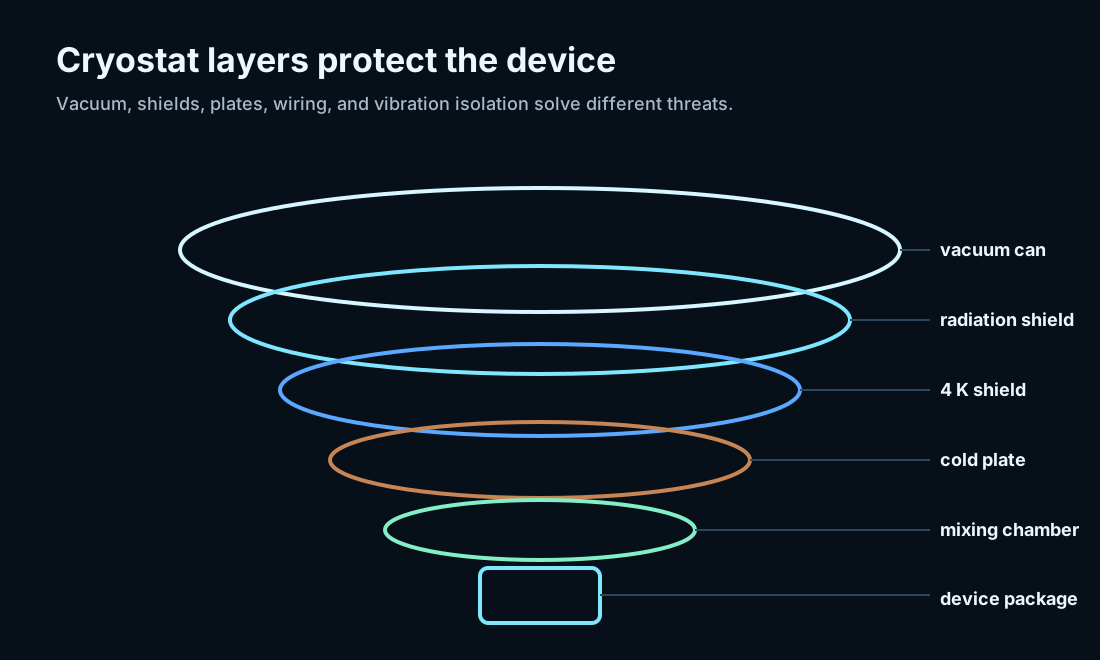
In a dry dilution refrigerator, the pulse tube precools the system. Bluefors describes a two-stage pulse tube with one stage cooling the 50 K flange and another cooling the 4 K flange, connected through flexible copper heat links. The dilution process begins after the system is cold enough for helium circulation and phase separation.
Design tradeoffs
| Concern | Why it matters |
|---|---|
| Cooling power | Determines how quickly higher stages can be cooled and how much load they can support. |
| Cooldown time | Affects hardware iteration and lab throughput. |
| Vibration | Mechanical vibration can couple into sensitive experiments and turn into heat. |
| Acoustic noise | Compressors and gas handling may need isolation from the cryostat room. |
| Energy use | NIST has highlighted pulse-tube energy and cooldown optimization as important for growing quantum infrastructure. |
| Serviceability | Compressors, valves, and moving infrastructure affect uptime. |
Cryogen-free does not mean helium-free
Dry systems avoid routine liquid-helium baths, but pulse tubes use high-pressure helium gas, and dilution refrigerators still circulate helium-3 and helium-4. This distinction matters for buyers, facilities teams, and anyone evaluating operating costs.
Related pages
What the diagram shows
Research sources
- NIST Big Quantum Chill: https://www.nist.gov/news-events/news/2024/04/big-quantum-chill-nist-scientists-modify-common-lab-refrigerator-cool
- Bluefors dilution refrigerator components: https://bluefors.com/stories/components-of-the-dilution-refrigerator-measurement-system/
- IBM Goldeneye: https://www.ibm.com/quantum/blog/goldeneye-cryogenic-concept-system