How Supplier Profiles Work
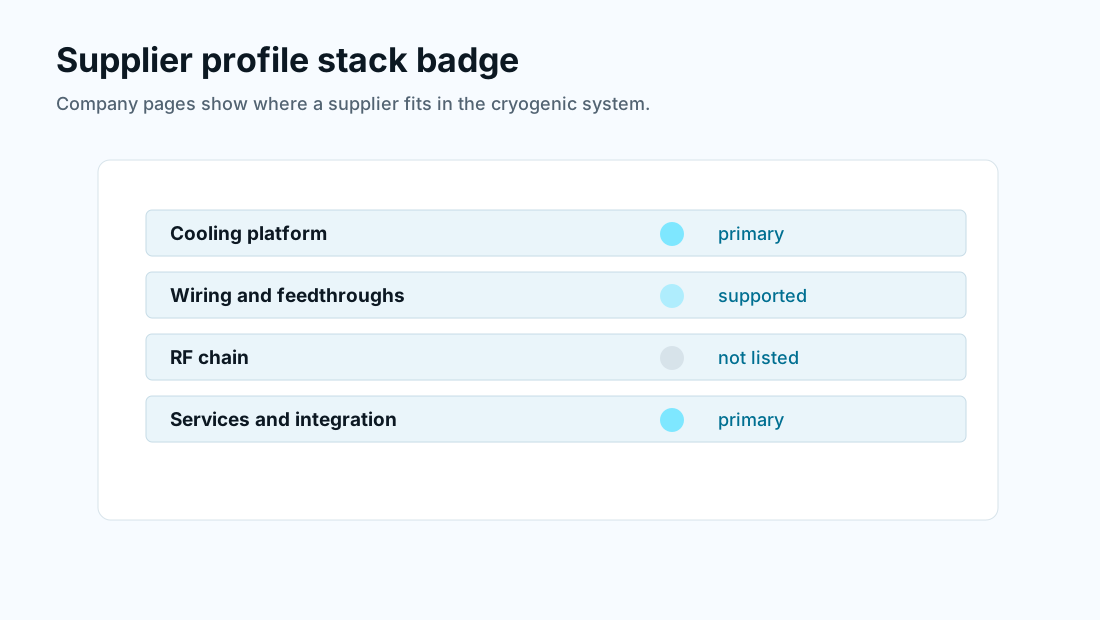
A useful supplier profile answers the questions a real buyer or researcher has before a sales call. What does the company make, where does it fit in the cold stack, and what public evidence supports the claim?
The comparison only works when profiles use the same basic shape: categories, stages, use cases, source links, caveats, and review status. That shared structure makes companies comparable without flattening real technical differences.
QCRY profiles are meant to be neutral, useful, easy to update, and clearly labeled when sponsored.
Company overview
The overview states what the company makes, where it is based, which quantum cryogenics categories it serves, and which buyer types are most likely to care.
Product categories
Relevant categories include:
- Dilution refrigerators.
- Cryostats.
- Cryogenic cables.
- RF components.
- Amplifiers.
- Temperature sensors.
- Vacuum systems.
- Control electronics.
- Integration services.
Quantum relevance
The quantum relevance section explains how the company participates in quantum computing, quantum sensing, quantum networking, superconducting detectors, or low-temperature research. Related QCRY component pages provide category context.
Specifications readers look for
For hardware suppliers, readers often look for:
- Temperature range.
- Cooling power.
- Frequency range.
- Connector types.
- Noise temperature.
- Power dissipation.
- Magnetic compatibility.
- Footprint.
- Software/control interface.
- Public documentation links.
Trust and disclosure
Every profile includes:
- Last reviewed date.
- Source links.
- Whether the company provided information.
- Whether the page is sponsored.
- Correction contact.
What the diagram shows
Research sources
- Bluefors: https://bluefors.com/
- Oxford Instruments: https://www.oxinst.com/
- Lake Shore: https://www.lakeshore.com/
- Low Noise Factory: https://lownoisefactory.com/